
Early Years Foundation Stage
Our Vision:
- To provide a safe, nurturing, stimulating and inspiring learning environment, both indoors and outdoors. We believe that the experiences children have at the very start of their school life are important in ensuring that they grow up as independent, resilient, and self-motivated learners.
- To ensure that ‘every child can thrive’ by recognising and valuing individual children’s strengths, talents, and interests.
- To develop a child’s curiosity, confidence and independence regardless of background, circumstance of needs.
At Bar Hill Primary School, we aim to give all the children a positive, stimulating, and meaningful start to their learning journey with us. We aspire to inspire our children to have a love of learning and be happy, well-rounded individuals equipped with the knowledge and skills needed to succeed in Primary School and beyond. We aim to work collaboratively with parents and carers to encourage independent, enthusiastic learners who thrive and reach their full potential. It is our intent that children who start their academic journey at Bar Hill Primary School begin their lifelong learning journey by developing physically, verbally, cognitively and emotionally whilst also embedding a positive attitude to school and a love of learning.
Our ambitious EYFS curriculum aims to enable our children to be:
- Competent and creative learners, who are curious about the world around them.
- Secure and confident and enjoy coming to school and learning new skills.
- Skilful communicators, who connect with others through language and play, ensuring that they play in a vocabulary rich environment.
It is our intent to ensure that all children receive high quality teaching of early reading through systematic, synthetic phonics to learn to read words and simple sentences accurately and fluently by the end of Reception.
We ensure that ‘every child thrives’, following the EYFS principles that every child is a unique child, who is constantly learning and can be resilient, confident, and self-assured. We know that children develop and learn at different rates, therefore we use our extensive knowledge and expertise to ensure that the curriculum meets the individual needs, interests, and development of each child, including children with special educational needs and disabilities (SEND) and English as an additional language (EAL). Early identification of a special educational need or disability is crucial. The Early Years Team work closely with all stakeholders involved in children’s development. This includes parents and carers, school and trust staff, academy councillors and external providers to help meet the needs of our learners. We acknowledge that some of our children have English as an additional language.
We support the development of their use of English as well as respecting their home language. We use the Nuffield Early Language Intervention (NELI) to develop English vocabulary and sentence structure.
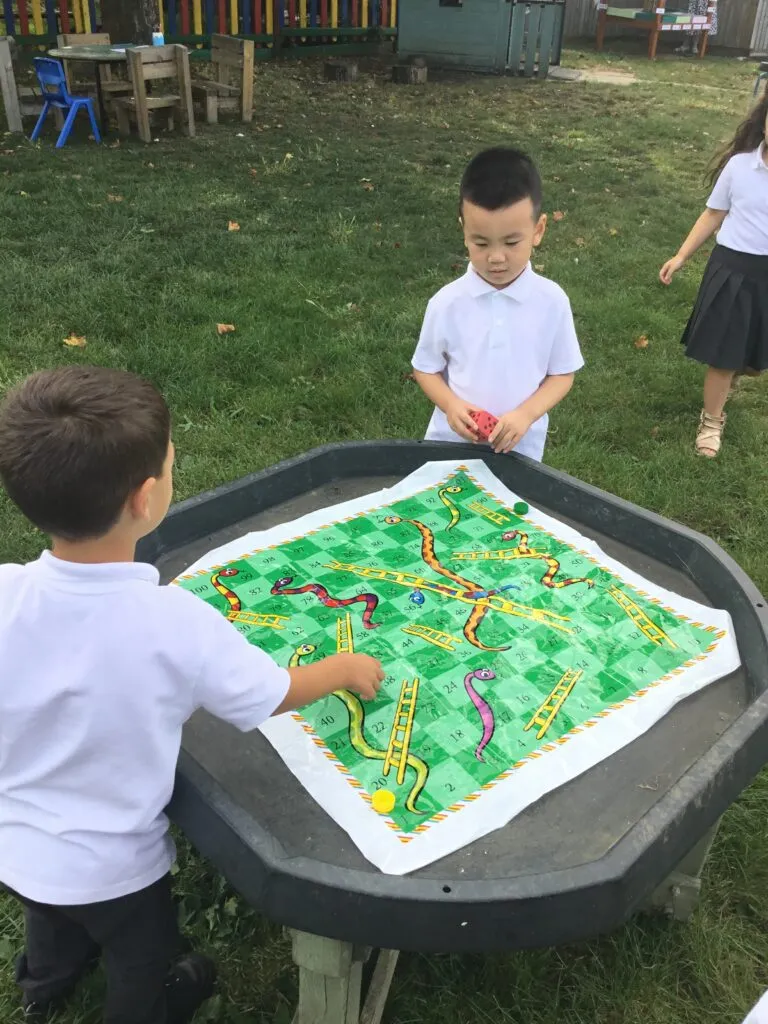
We plan children’s learning experiences in accordance with the Early Years Foundation Stage (EYFS) curriculum guidance and principles, with a focus on adapting the learning to meet the needs and interests of the children. The EYFS is made up of seven areas of learning that are inter-connected. The three prime areas are Communication and Language, Physical Development, and Personal, Social and Emotional Development. There are also four specific areas, through which the three prime areas are strengthened and applied. These are Literacy, Mathematics, Understanding of the World, and Expressive Arts and Design. All these areas support the children in progressing towards attaining the government’s statutory end of year Early Learning Goals. Our curriculum provides a play-based and experiential learning environment, combined with focussed teaching, to ensure children make rapid progress before moving onto Year 1. The children in Reception are provided with ample opportunities to access our indoor and outdoor provision. They engage in planned, focussed activities as well as self-initiated and free flow activities. To further enhance learning, we welcome visitors into school and go on school trips. These experiences and opportunities inspire the children to ask questions and talk about life beyond the classroom.
Our Curriculum and the adults working with the children, promote and support children’s emotional security and development of their character, enabling children to take risks in a safe and secure environment and develop a growth-mindset and improve their self-worth and independence. Adults will also support and encourage children to be active and to develop physically including giving clear messages to children why it is important to eat, drink and exercise as well as to be kind to others.
Our children will grow to be confident, competent lifelong learners and good citizens. They will recognise the qualities they have developed which enable them to be good learners such as resilience, determination, perseverance and thinking creatively. The children at Bar Hill Primary School experience a smooth transition from Reception to Year 1. Effective communication and collaboration ensure the children leave the EYFS with a solid foundation of learning of which to build upon.
We use exercise books in Reception, which evidence to the children and their families the successes of the children throughout their time in Early Years.
As a team, we carry out regular internal moderation sessions and ensure that staff attend external meetings and training to ensure that we feel confident with our judgements and that these judgements are consistent with a range of other settings. Assessment starts with careful observations which are then used to inform planning. Learning and teaching is thus effective when children feel a sense of belonging, curiosity and competence showing resilience and tenacity. By monitoring assessment procedures regularly, we can effectively demonstrate what learning is taking place and how each child is progressing in all seven areas of the EYFS curriculum. Progress toward the ELGs will ensure a positive disposition to learn.
How can you help at home?
Parents often ask how they can help their child at home as they sometimes find the start to the educational journey an exciting, but daunting time. There are many ways to help develop your child. Please read the below information.
Maths
Counting in everyday life is important so that the children learn the relevance to what they are learning. Touch the objects as you count (if possible) so that your child doesn’t learn only by rote. Make it fun and relevant e.g. counting actions such as jumps or claps. You could count the cars as you are driving along, or count how long it takes for the bath to fill up, or how many stairs are in your house or in your nan’s house- are there the same?
Writing
You can help your child to recognise his/her own name by using small script letters that the children will use when they learn to write in school. The formation phrases we teach the children to support them with letter formation can be found here Little Wandle - Resources for Parents
Children develop writing skills at different stages. They need to be physically ready to be able to manage the precise movements needed for number and letter formation.
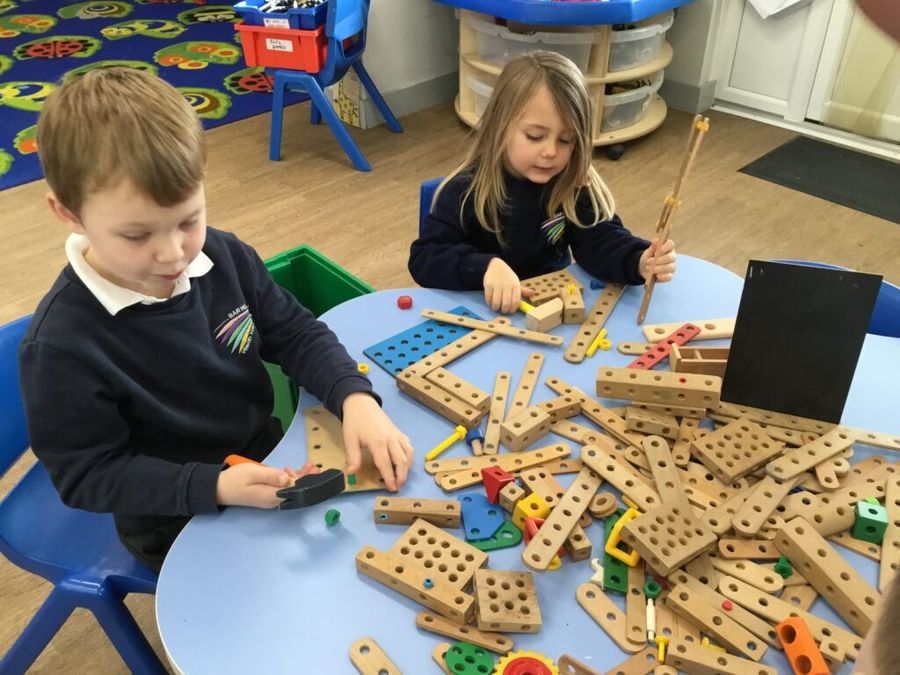
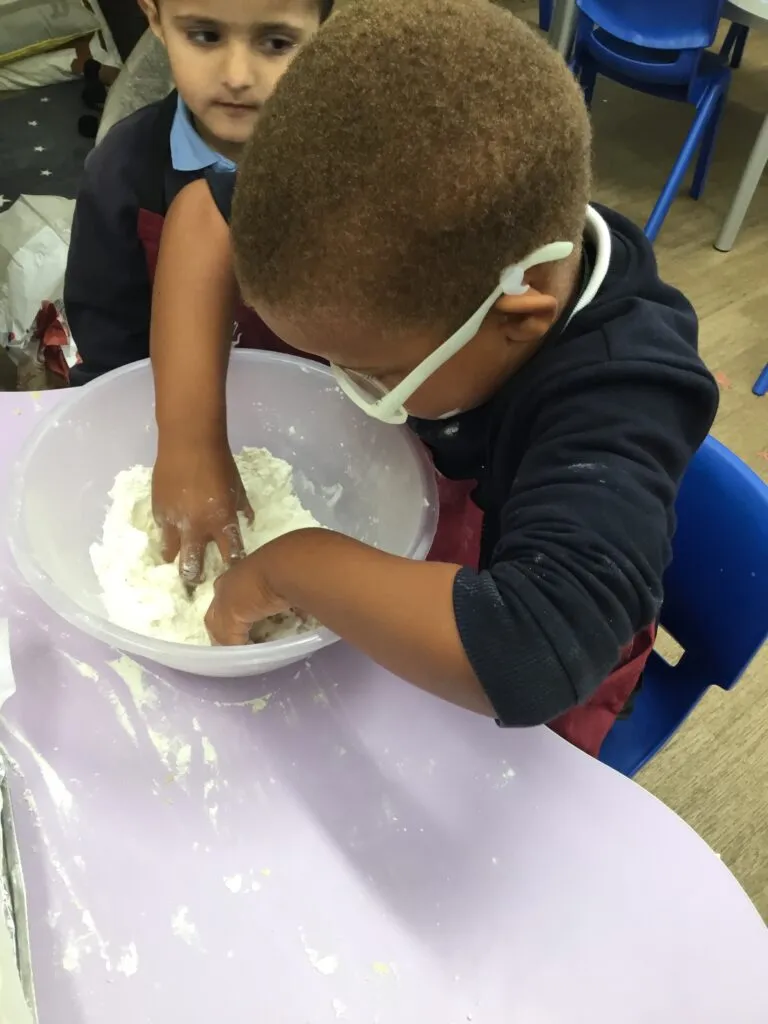
Activites that aid this eye and hand co-ordination consist of jigsaws, construction toys (eg Duplo, Lego), bead threading and using malleable materials such as dough or clay.
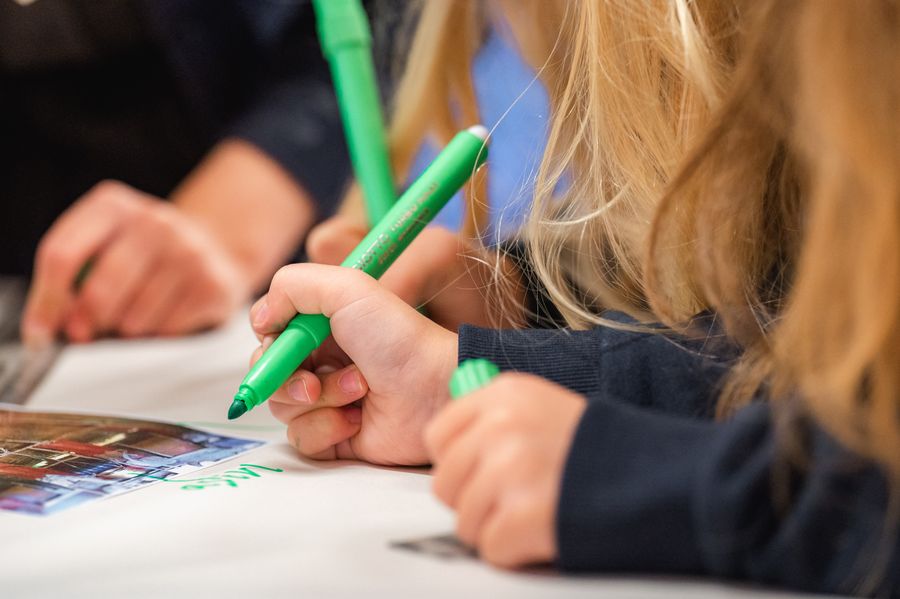
Crayons, thick pencils and large brushes used on large paper – in the form of mark making, drawing and pattern-making – are excellent for encouraging flow and movement.
Please encourage children to mark make and value their early writing. It is also essential that they see you doing this.
Reading
You can also look at books with your child as often as possible (preferably every day). Show him/her how to hold a book correctly and point to the text, showing that the direction goes from left to right. Talk about the stories encouraging retelling in your child’s own words. Look at the cover and discuss the illustrations.
Speaking and Listening
Encourage your child to listen carefully to stories, poems and instructions. Help him or her to talk freely using clear diction. Get your child to question and respond. Stress the importance of turn taking and working co-operatively with peers. Sometimes children get a little muddled with the choice of words they use. If this is the case, model back to them the correct choice of word so they have the opportunity to learn and re-phrase the next time.